THE TAKEAWAY
An out-of-pocket maximum usually applies to defined covered costs under your health plan. It is not a universal ceiling on every charge that might appear after an ambulance ride.
What does an out-of-pocket maximum mean?
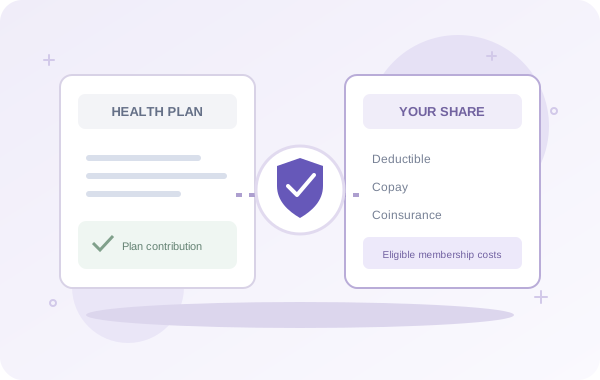
HealthCare.gov describes the out-of-pocket limit as the most you pay for covered services in a plan year, counting applicable deductibles, copays, and coinsurance for in-network care. Once the limit is reached, the plan pays the covered benefits that fall within those rules.1
The important words are covered, in-network, and plan year. They tell you which expenses belong in the calculation and which time period applies. When you review an ambulance benefit, keep the definition beside the limit amount. Looking at the number alone can leave you with an incomplete picture of the protection.
Which ambulance charges may fall outside the limit?
Monthly premiums, services the plan does not cover, out-of-network care, and charges above the allowed amount can fall outside the standard limit described by HealthCare.gov.1 Your plan’s terms and applicable law determine how a particular ambulance claim is treated.
Use that distinction when you read a statement. A deductible assigned to an approved claim and a separate charge above an insurer’s allowed amount may not be treated the same way. A denied claim also raises a different question from an approved claim with ordinary cost sharing.
Do not assume an extra provider charge is legally owed simply because it appears on a bill. Ask how it was calculated, whether the insurer processed the transport correctly, and which billing protections apply. The task is to clarify the charge before treating every line as part of one deductible calculation.
Check ground and air ambulance insurance benefits separately
Ground and air ambulance services have different federal balance-billing treatment. Many covered air ambulance services have federal out-of-network protections; ground ambulance services generally fall outside those protections, with possible state safeguards.2 A general statement about your health plan’s limit does not resolve every transport-billing question.
Make a short list for your insurer: Does emergency ground transport count toward the in-network limit? How is emergency air transport handled? Are there separate coverage conditions? How would a denial or a charge above the allowed amount appear on the explanation of benefits?
Ask for the relevant benefit language or document reference. Keeping the answer with your records is more useful than trying to remember a broad reassurance later, especially if several people in your household share an insurance arrangement.
Review your remaining deductible and family limits
Even when a covered expense counts toward the limit, you may still have a substantial amount left before reaching it. Look at your insurer’s current record of deductible and out-of-pocket spending. Confirm that processed claims and payments have been recorded correctly, and check which plan year the amounts belong to.
For family coverage, ask how the plan applies its individual and family limits. Different benefit arrangements can have different mechanics. You do not need to become a claims expert to prepare; you need the right documents and a clear answer about how the ambulance benefit applies to the people insured.
Compare protection for eligible ambulance expenses
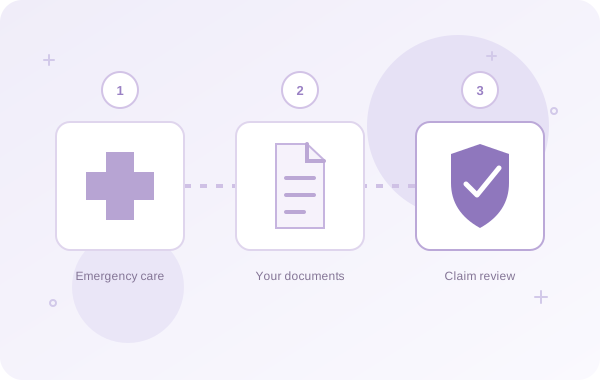
EMS360 memberships address eligible emergency ambulance costs under the applicable Membership Agreement. Comparing a membership with your health plan means understanding the purpose of each: the health plan’s coverage and cost-sharing rules, and the selected emergency transport benefit.
Review Ground, Air, or Ground + Air, then choose the people to include. Check eligibility, exclusions, state availability, and claim requirements before purchasing. A membership claim still requires review, and the agreement governs what EMS360 can pay.
A practical next step is to write down your remaining insurance questions and compare them with the ground and air ambulance benefits. Clear definitions help you make the decision before an emergency rather than discovering the distinction while reading an unexpected bill.
Sources & further reading
This article is educational. Your health plan and applicable EMS360 Membership Agreement determine coverage, eligibility, exclusions, and claim requirements. In a medical emergency, call 911.